Native Marginal Plants for Small Wetlands: A Planting Guide
A small wetland is not really a pond with plants around it. It is an edge with water in the middle. The strip where soggy soil meets open water does most of the work in a wildlife garden — it feeds insects, hides froglets, and gives dragonfly nymphs a ladder to climb when they finally leave the water. Get that strip right and everything else tends to follow.
The good news is that you do not need a lake. A half-barrel, a lined hollow, or a boggy corner that never quite dries out can carry six or seven native species comfortably, provided you put each one at the depth it actually wants.
Why Marginal Plants Earn Their Space
Marginal plants sit at the junction between two habitats, which is why the diversity of life around them is so high. Their flowers supply nectar and pollen from early spring onwards, when little else is open. Their leaves feed the larvae of moths and sawflies. Their stems and seed heads see insects and birds through the winter.
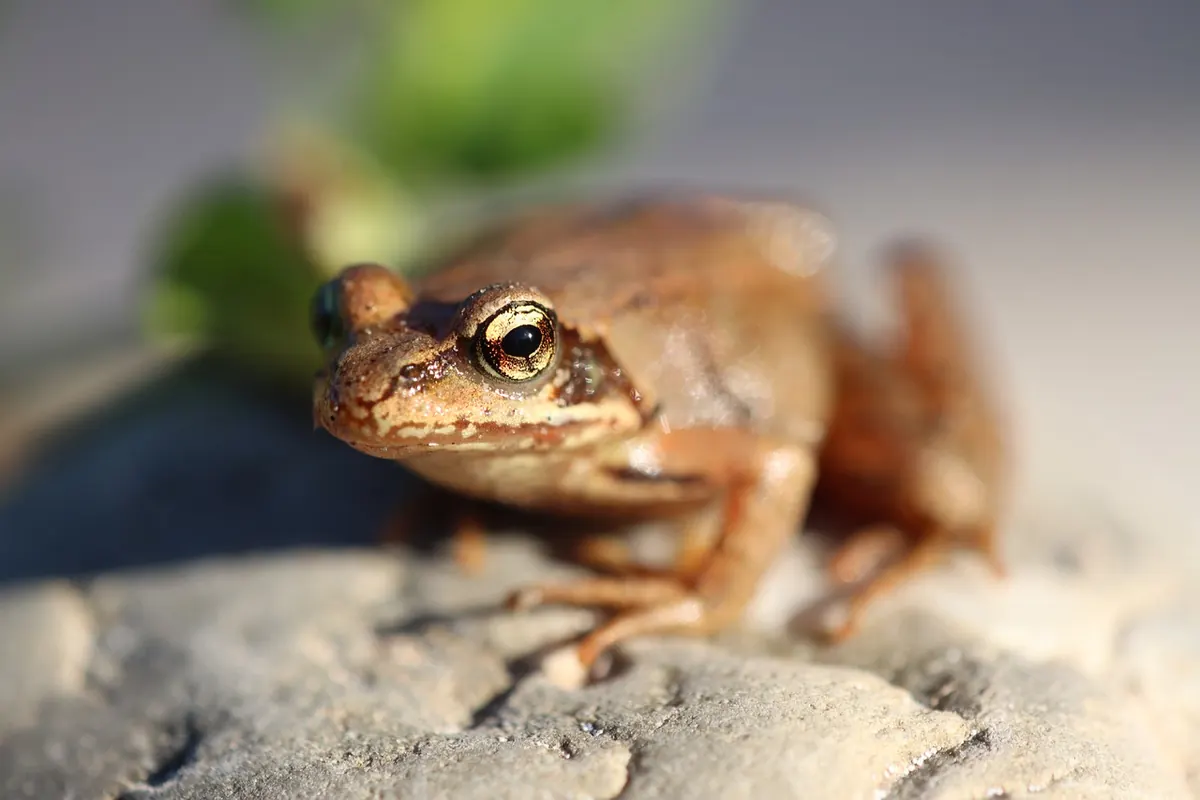
There is a practical side too. Roots and foliage take up nitrogen and phosphorus that would otherwise feed blanket weed and algae. Overhanging leaves shade the water and keep it cooler in summer, which suits amphibians and slows evaporation. Dense clumps of rush and mint give young frogs somewhere to sit that is not an open, exposed surface.
Match the Plant to the Water Depth
Most planting failures in small ponds come down to depth. A marsh marigold dropped into 30cm of water will sulk and rot; a bogbean stranded in dry soil will do the same. Think of the edge as four rough bands:
- Boggy margin — soil that stays damp but is rarely under water. The richest zone for flowering plants.
- Shallow water — 0–10cm over the crown. Where most true marginals belong.
- Shallow to mid water — 10–30cm. Fine for yellow flag iris and bogbean, too deep for most others.
- Damp ground beyond the liner — the soil around the pond, often the best place for taller species you want to keep in check.
If your pond has a soft liner, stand pots on a ledge or raise them on bricks rather than letting them sink. The crown of the plant — where the stems meet the roots — should sit just above the water surface for most species.
Six Native Plants That Work in Small Wetlands
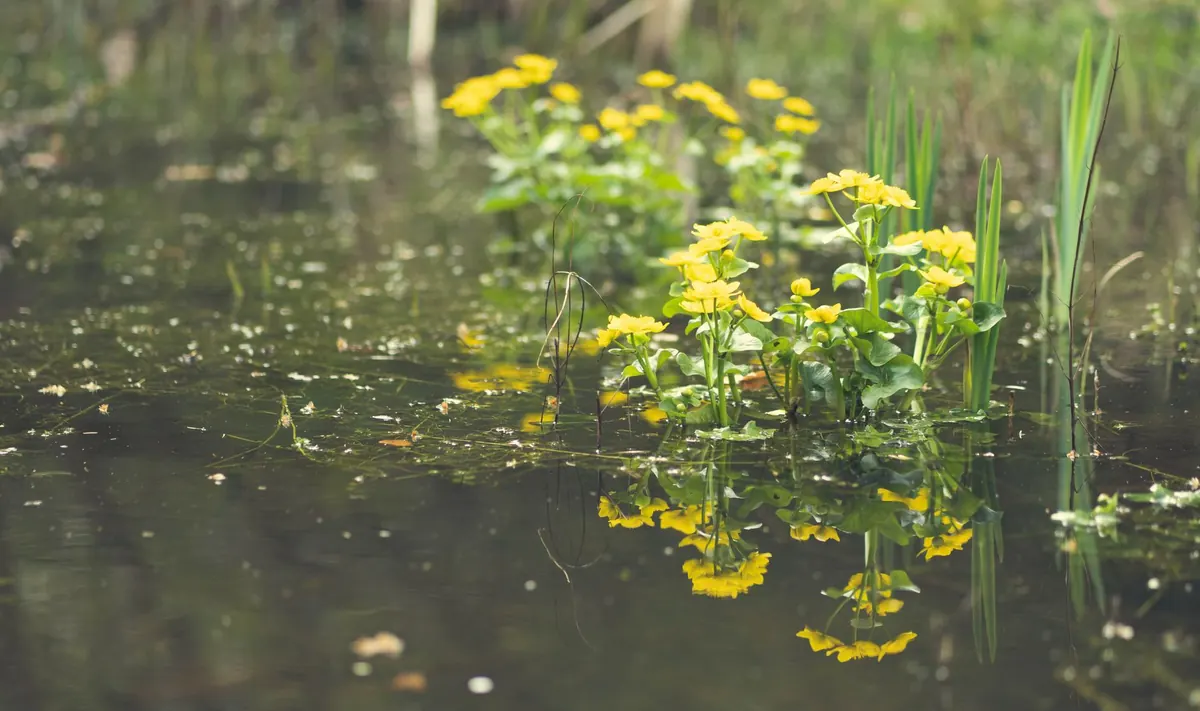
Marsh marigold (Caltha palustris) is the first big event of the pond year. Golden flowers open from March, sometimes through snow, and the bees find them. It is happiest in boggy ground or very shallow water and disappears underground by midsummer, so pair it with something that fills the gap.
Water forget-me-not (Myosotis scorpioides) does the opposite job. Low, creeping and covered in sky-blue flowers from late spring, it makes soft cover at the waterline where froglets and newt larvae can hide. It will grow in 5cm of water or in soil that is merely wet.
Water mint (Mentha aquatica) is the best late-season nectar plant on this list. Lilac flower heads appear from July and pull in bees, hoverflies and butterflies well into autumn. It spreads by runners, so give it a pot or a corner you are happy to let it claim.
Purple loosestrife (Lythrum salicaria) sends up metre-high spires of magenta from midsummer and is a magnet for bumblebees. It is also vigorous. In a small pond it needs a basket or a damp border position, otherwise it will quietly become the whole planting scheme.
Soft rush (Juncus effusus) provides the architecture. Evergreen tussocks give structure in January when everything else is straw, shelter for invertebrates at the base, and seed for finches. It copes with wet soil and with short dry spells, which makes it forgiving.
Lesser spearwort (Ranunculus flammula) is the modest option for a tiny pond: small buttercup flowers on creeping stems from June to September, growing happily in a few centimetres of water. Worth wearing gloves when handling, as with other buttercups.
Also good, if you have the space: ragged robin for damp meadow ground, brooklime for an evergreen edge, water plantain for shallow water, and bogbean where you want something unusual in 10–20cm.
Planting: Baskets, Loam and Timing
Early autumn and spring are the kindest windows. Avoid planting in a heatwave or a hard frost.
- Buy from a reputable aquatic nursery, and never lift plants from the wild — it damages the site and often breaks the law.
- Use aquatic baskets lined with hessian. They contain runners, which matters enormously in a small pond.
- Fill with loam or aquatic soil rather than multipurpose compost. Compost is too rich, floats, and feeds algae.
- Firm the plant in, then top the basket with gravel to stop soil drifting and blackbirds flinging it about.
- Lower gently. Adjust the depth with bricks rather than by burying the crown.
Group plants in odd numbers and in drifts rather than dotting single specimens about. Three marsh marigolds read as a planting; one reads as an accident.
Problems to Avoid
The biggest mistake is introducing a plant you cannot remove. Australian swamp stonecrop, floating pennywort, water fern and parrot's feather are not garden plants to take a chance on — several are subject to legal restrictions in the UK, and all are near-impossible to clear once established. If in doubt, leave it out.
The second mistake is over-feeding. Skip fertiliser entirely. If your pond has fish, plant heavily and accept that some plants will be nibbled. If blanket weed takes hold, more marginals and some shade will do more good than any chemical treatment.
Keeping It Going
Leave seed heads and hollow stems standing through winter, then cut back in late February or March, lifting the debris out rather than letting it sink. Divide congested baskets every two or three years, in spring, and replant the healthiest sections. Thin aggressive growers at the same time, before they get the upper hand.
Top up water levels in summer with rainwater rather than tap water, and scoop out fallen leaves in autumn so they do not rot down and feed the algae. Do those few jobs and a small wetland needs very little from you — which is rather the point of planting the edge properly in the first place.
Photo: Nicole Menke / Pexels