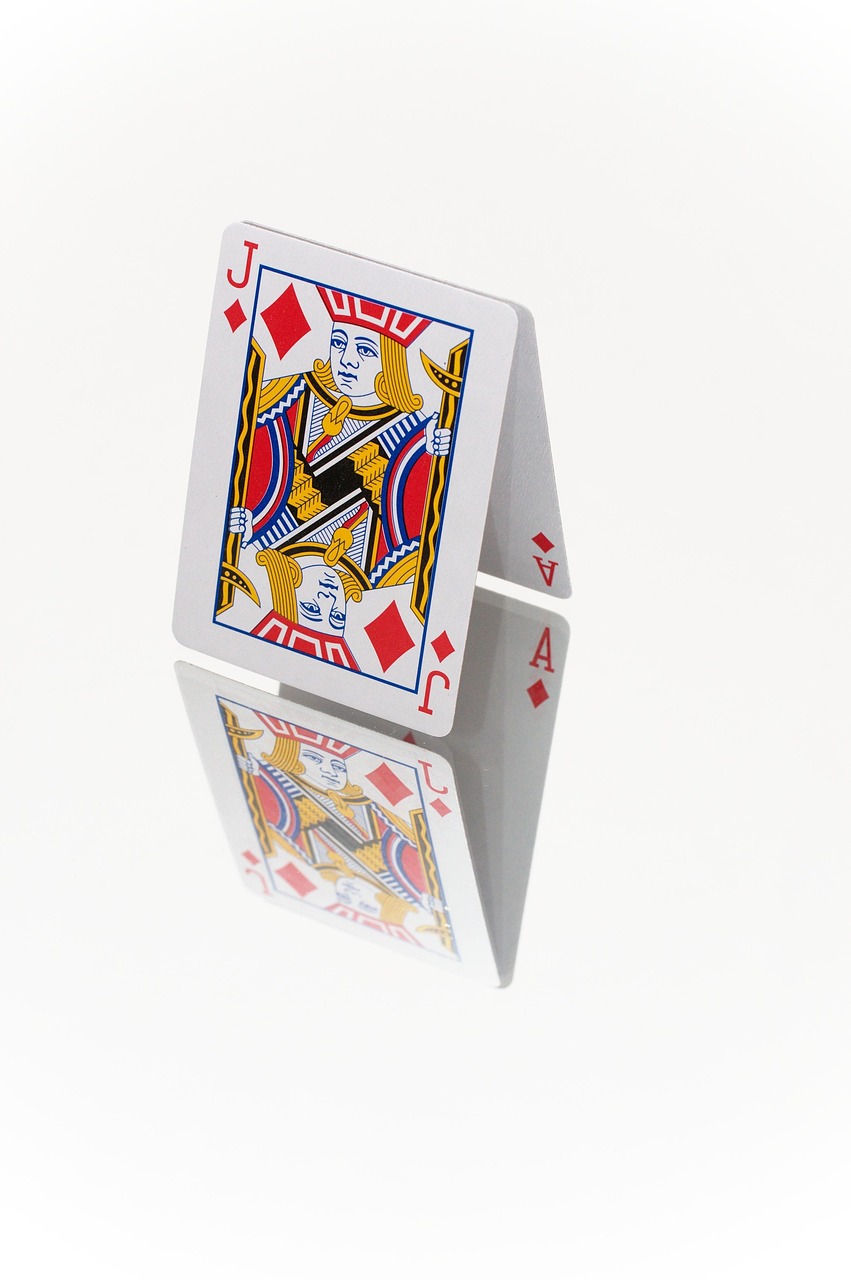
The House Always Wins? How Smart Players Beat Casino Odds
Every gambler has heard the phrase "the house always wins." It's true -- but only in the long run, and only on average. The gap between that cold statistical reality and the messy, human experience of sitting at a blackjack table or spinning a slot machine is where the entire iGaming industry lives. Understanding that gap won't make you rich, but it will make you a sharper player who loses less, lasts longer, and occasionally walks away ahead.
Let's dig into what actually happens when you click spin, what separates a good poker player from a lucky one, and why the smartest people in the room are usually the ones betting the least. Those comparing choices often turn to mahjong way 1.
The Math Nobody Wants to Read (But Should)
Every casino game carries a built-in mathematical edge called the house advantage. It's not a scam; it's the business model. On a standard American roulette wheel, the two green zeros give the house a 5.26% edge. European roulette, with just one zero, drops that to 2.7%. That single pocket is the difference between bleeding money slowly and bleeding it very slowly.Slots are a different beast entirely. Modern video slots typically run house edges between 2% and 10%, depending on the game and jurisdiction. A high-volatility slot like a classic Megaways title might pay out 96.5% RTP on paper, but that number is calculated over millions of spins. In a single 200-spin session, your actual return could be 20% or 400%. RTP is a marathon statistic; players experience the sprint.
Here's a concrete example. You deposit $100 and play a slot with 96% RTP. Theoretically, you'll lose $4 per $100 wagered. But if you're betting $1 per spin, you'll wager $100 in 100 spins -- and lose your entire balance in perhaps 15 minutes if variance turns ugly. The math doesn't care about your feelings, your rent, or your "system."
Skill Games vs. Chance Games: Know the Difference
This is the single most important distinction in gambling, and most casual players blur it constantly.
- Pure chance: Slots, roulette, craps, keno, baccarat. No decision you make changes the underlying odds. Card counting in blackjack sits in a gray zone -- technically skill, but casinos can and will ban you for it.
- Skill-influenced: Poker, sports betting, daily fantasy. Here, information, discipline, and reading opponents actually move the needle over time.
- Hybrid: Video poker and blackjack with basic strategy. The house edge shrinks dramatically with correct play -- sometimes below 0.5% -- but you're still fighting the math.
If you want a realistic shot at profit, plant your flag in the skill-influenced category. If you want entertainment, accept that slots and roulette are the price of admission. Confusing the two is how people lose money they can't afford to lose.
Poker: Where the Edge Is Real
Poker is the only mainstream casino game where a skilled player can consistently beat the rake and win over thousands of hands. But the skill ceiling is brutal. The difference between a break-even player and a winning one often comes down to three unglamorous habits:
- Position awareness. Acting last gives you information. Playing too many hands from early position is the most common leak among amateur players.
- Bankroll management. Winning players risk 1-2% of their roll per buy-in. Recreational players buy in for 50% and wonder why variance destroys them.
- Emotional control. Tilt costs more money than bad luck. The player who can fold a losing session and walk away is already ahead of 80% of the field.
Online poker adds another layer: multi-tabling, HUDs, and solvers have raised the floor of competence. The days of easy money against clueless opponents are largely gone at mid-stakes and above. If you're starting out, play micro-stakes, study hand histories, and treat every session as a lesson rather than a lottery ticket.
Slots: Entertainment, Not Investment
Let's be honest about slots. They're the most popular product in iGaming for a reason -- they're simple, visually stimulating, and offer the dream of a massive multiplier from a tiny bet. But the design is deliberately engineered to keep you spinning.
Features like autoplay, loss disguised as near-misses, and cascading wins are not accidents. They're retention mechanics. A few practical tips if you enjoy slots anyway:
- Set a hard loss limit before you start, and treat it as spent money, not a temporary loan to the casino.
- Check the RTP published in the game's info panel. Anything below 95% is a worse deal than most table games.
- Avoid chasing bonuses with 40x wagering requirements unless you genuinely enjoy the grind -- the math often makes them worthless.
- Understand volatility. High-volatility slots can eat 300 spins without a meaningful win. Low-volatility slots pay more often but smaller.
Bonus Terms: Where Casual Players Get Burned
Welcome bonuses look generous until you read the fine print. That "100% up to $500" offer usually comes with a 35x wagering requirement on the bonus amount, a maximum bet cap of $5 per spin, and a game-weighting table where slots contribute 100% but table games contribute 10% or nothing at all.
Do the math before you claim. A $100 bonus with 35x wagering means you must wager $3,500 before withdrawing anything. At a 4% house edge, your expected loss on that wagering is $140 -- more than the bonus itself. Bonuses aren't free money; they're a contract where the casino usually has the better end.
That said, reload bonuses, cashback offers, and rakeback can be genuinely +EV for disciplined players. The key is reading the terms and calculating the expected value before opting in, not after.
The Only Strategy That Actually Works
Here's the uncomfortable truth that separates long-term survivors from eventual casualties: no betting system beats the house edge. Not Martingale, not Fibonacci, not "playing only on Tuesdays." These systems redistribute wins and losses; they don't change the underlying math.
What does work is boring and unglamorous:
- Play games with the lowest house edge you can find (blackjack with basic strategy, European roulette, video poker).
- Play within a budget you'd be comfortable losing entirely.
- Specialize. Become genuinely good at one game rather than mediocre at five.
- Track every session. Data kills self-deception.
- Walk away when you're ahead, and more importantly, when you're behind.
The casino doesn't need you to lose every night. It just needs you to keep playing. The players who understand this -- who treat gambling as entertainment with a known cost, or as a skill game where they've done the work -- are the ones who don't end up as cautionary tales.
The Bottom Line
iGaming is a mature, regulated, and increasingly sophisticated industry. The games are fair in the sense that the odds are published and the RNGs are audited. But fair doesn't mean favorable. Your job as a player isn't to beat the casino at its own game; it's to know exactly which game you're playing, what it costs, and whether you're still having fun. Do that, and you'll be sharper than 95% of the people spinning next to you.